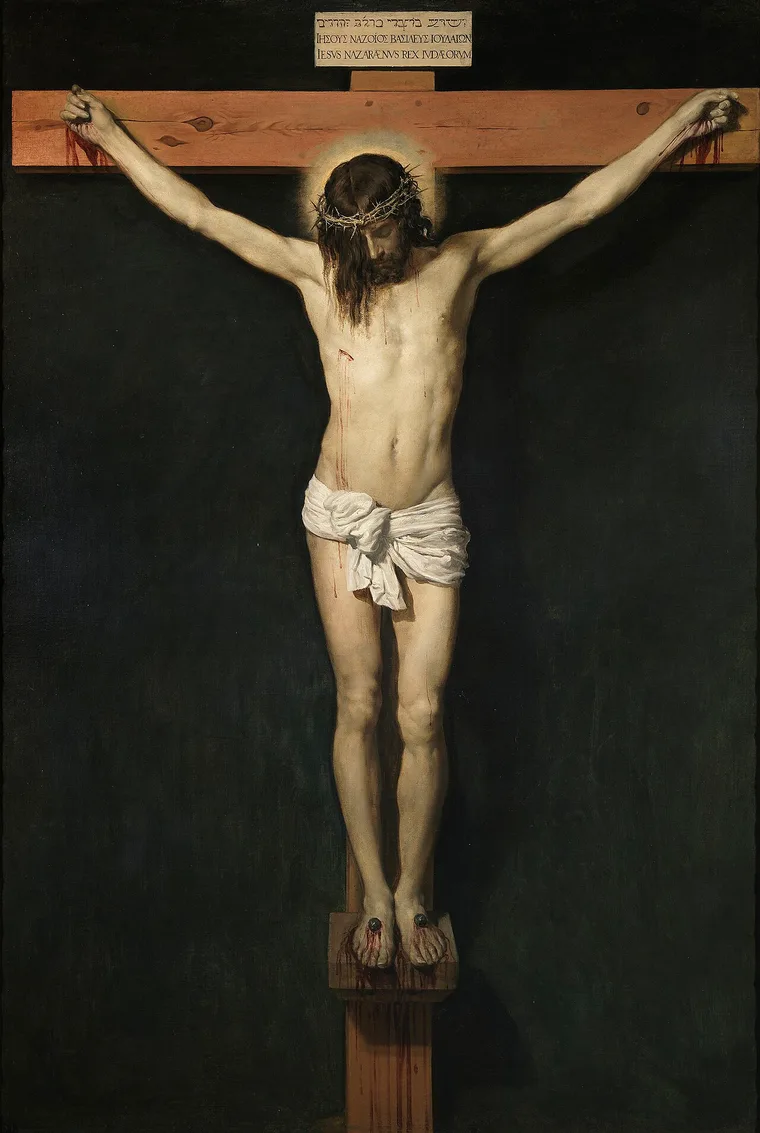
Did he really rise?
This is what happened to Jesus’s closest followers after they said they saw him alive again, why none of them took back their story, and what the other explanations miss.
First, did Jesus really die? Some people say he just fainted on the cross and woke up later in the tomb.
But the Romans didn’t joke about . They were professionals at killing.
It was their public warning to anyone who crossed Rome, and soldiers who let a prisoner get away could pay with their own lives.
A man on a cross could only breathe by pushing himself up on his legs, so the soldiers broke the legs of the crucified men to speed up their deaths.
When they came to Jesus, they found him already dead.
To make sure, one of them drove a spear into his side, and blood and water came out.
, the Roman governor, even checked with the officer in charge that Jesus was dead before he let anyone take the body.
He was dead.
So the next question is the real one.
This is the one everything stands or falls on. , one of the first Christian leaders, says so himself: if Christ has not been raised, our faith is useless.
is a title for Jesus, meaning the rescuer God had promised.
And in one of his letters, Paul passes on a creed, which is a short statement of belief. He says he had received it himself:
that Christ died for our sins in accordance with the scriptures; that he was buried; that he was raised on the third day in accordance with the scriptures; that he appeared to Cephas, then to the Twelve. After that, he appeared to more than five hundred brothers at once, most of whom are still living…
Cephas is ’s name in Aramaic, the language Jesus spoke.
The Twelve are the twelve men Jesus chose as his closest followers, and Peter was one of them.
Most scholars, including skeptical ones, date that creed to within a few years of the crucifixion.
And naming living witnesses is basically saying: go and ask them.
Jesus’s tomb was first found empty by women. Back then a woman’s word counted for very little.
, a Jewish historian of the time, records the rule for the courts: let not the testimony of women be admitted.
That was the prejudice of their world, not the truth about women. But think about what it means for the story.
If you wanted people to believe it, you’d have Peter or John, two of the Twelve, find the tomb, men whose word everyone would accept.
So if you were making the story up, you wouldn’t pick the women.
Even the , as the Twelve were called, didn’t believe the women at first. Luke’s says their report seemed to them like nonsense.
Why do you think the Gospels say women found the tomb first?
Pick an answer below.
For me, the most important evidence of all is what happened to the apostles, because it’s human. You don’t need to read ancient Greek to weigh it.
You only need to know people, and people haven’t changed in two thousand years. So look at who these men were before they said they saw Jesus alive, and who they were after.
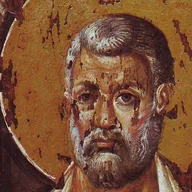
The night Jesus was arrested, Peter followed at a distance into the courtyard of the high priest’s house and stood warming himself by a fire.
A servant girl looked at Peter and said he had been with Jesus.
He swore he had never known the man, three times.
Earlier that night, Jesus had told him this would happen before the rooster crowed. When it crowed, Peter went out and wept bitterly.
Then Peter hid with the other followers behind locked doors.
About fifty days later, at the Jewish feast of , he stood up in Jerusalem, the same city that had just crucified Jesus.
He told a crowd that God had raised Jesus from the dead.
Arrested and brought before the same that had condemned Jesus, Peter told them: we cannot stop speaking about what we have seen and heard.
He was flogged, and went on preaching. He died in Rome under the emperor Nero, around AD 64; early tradition says he was crucified, upside down.
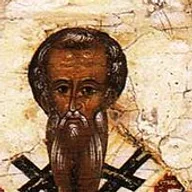
In the ’s world, “brother” covered close relatives, not only sons of the same mother.
The Catholic Church holds that Mary, Jesus’s mother, had no other children, so James was a kinsman, most likely a cousin.
tradition calls him a son of Joseph, Mary’s husband, from an earlier marriage.
Many Protestants believe he was a younger son of Mary and Joseph.
Whichever is right, he was family, and family didn’t believe.
Mark’s Gospel says Jesus’s relatives came to take him home because they thought he was out of his mind.
John’s Gospel says flatly that even Jesus’s brothers did not believe in him.
Paul names James among those the risen Jesus appeared to.
Within twenty years he was the leading figure of the church in Jerusalem, the one who spoke last at the council of the apostles.
Around AD 62, the high priest had James stoned to death.
Josephus, who was not a Christian, records it.
He adds that fair-minded people in the city were so upset that they complained to the king, and the high priest lost his job.
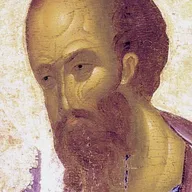
Paul, then called Saul, was a rising star in Judaism, trained under the great teacher Gamaliel, more serious about his faith than anyone his age, by his own account.
When Stephen, the first Christian , was stoned, the killers laid their cloaks at Saul’s feet, and he approved.
He went house to house dragging Christians off to prison, then set out for Damascus, in Syria, with letters to arrest more.
On the road to Damascus, he says, the risen Jesus met him.
He spent the next thirty years walking and sailing thousands of kilometres across the Roman world, starting churches and writing the letters we still read.
Everything he had been proud of, he wrote, he now counted as rubbish next to knowing Christ.
He was whipped, beaten with rods, stoned and left for dead, shipwrecked three times, and jailed again and again.
He was executed in Rome in the 60s; tradition says he was beheaded, as a Roman citizen.
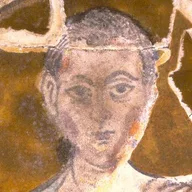
He wasn’t there the first time the others said they had seen Jesus alive, and he refused to take their word for it.
He said: unless I see the nail marks in his hands and put my finger into them, I will not believe.
A skeptic after my own heart.
A week later Jesus appeared again and told Thomas to touch the wounds.
Thomas answered, “My Lord and my God”, the most direct confession in the Gospels that Jesus is God.
says he carried the gospel, the good news about Jesus, as far as India and was killed near what is now Chennai.
The St Thomas Christians of Kerala, in the south of India, still trace their faith back to him.
When someone tells a lie and sticks to it, what are they usually after?
Pick an answer below.
Now think like a detective. Why do people lie? For money, for power, for pleasure, or to save their own skin. The apostles got none of it.
What they got for their story was prison, beatings, exile and death.
Paul lists being whipped five times, beaten with rods three times, stoned once and shipwrecked three times.
If it was a scam, it was the worst scam in history, because nobody who ran it got anything out of it.
And cover-ups crack. In the 1970s, the men around an American president tried to cover up a break-in at the Watergate building.
They had money, power and the best lawyers in the country, and once prison was on the table, the story fell apart within about a year.
The apostles had no money and no power, and faced far worse than prison.
And as far as any source tells us, not one of them took it back to save himself.
To be honest about the evidence: the early sources only tell us how three of them died.
We know how James died from Josephus, the Jewish historian.
And we know how Peter and Paul died from a letter written in Rome around AD 96.
For the rest we only have later traditions.
Even a Roman who put Christians on trial, decades later, noticed the same thing.
Around AD 112, Pliny, a Roman governor, made accused Christians offer incense to the emperor’s statue and curse Christ, and added:
none of which those who are really Christians, it is said, can be forced to do
I couldn’t make it add up any other way.
People will die for something false that they believe is true. Nobody dies for a lie they know they made up themselves.
Frightened people don’t turn brave overnight for a story they invented.
Grief can make someone think they’ve seen a person they lost.
But it doesn’t usually turn a skeptical relative and a persecutor into believers, or show five hundred people the same thing.
Here are five things any explanation of Easter has to explain. Pick an explanation and see what it covers.
Sources +
Tacitus, Annals 15.44; Josephus, Antiquities 18.63 and 20.200; 1 Corinthians 15:3–8; Galatians 1:13–19; Acts 8:3; Mark 3:21; John 7:5, 19:34, 20:2; Matthew 28:11–15; 1 Clement 5; Bart Ehrman, How Jesus Became God (2014).
I looked at every other explanation I could find: that they hallucinated, that the body was stolen, that the story grew into a legend over time.
For me, each one explained one piece and broke on the rest.
And here’s what makes this evidence different from the rest: you can still see it today.
In 2015, 21 men were marched onto a beach in Libya and killed for being Christians.
They are remembered for calling on the name of Jesus as they died.
All over the world, people still walk away from addictions, violence and old lives, and they all point to the same person.
I’m one of those changed lives myself. I went from lying on a rooftop, terrified of dying, to being able to look at death without it owning me.
You can stop here.
Paintings: Christ Crucified by Diego Velázquez, about 1632; The Death of Jesus by James Tissot, 1886–94. Icons: Peter, Sinai, 6th century; James, Novgorod, 16th century; Paul, Andrei Rublev, about 1410; Thomas, Byzantine, Walters Art Museum. All public domain, via Wikimedia Commons.


